References for Warp, Weft, and the Worldwide Web: The Costs and Benefits of Broadening Access to Textile/Clothing Collections through Digital Distribution

Darbey, N., & Hayden, H. (2008). Special collections for beginners: A case study of special collections at Waterford Institute of Technology library service. New Library World, 109(5),  258-272. http://dx.doi.org.proxy.lib.wayne.edu/10.1108/030748008108736050

Annotation: This is a case study on how an institution took in three old, valuable special collections (non-textile) with limited staff and budget, and outlines some of the general challenges of physically housing a collection, as well as digitizing it.

Evans, M. R. (2015). Modern special collections: Embracing the future while taking care of the past. New Review of Academic Librarianship, 21(2), 116–128. https://doi-org.proxy.lib.wayne.edu/10.1080/13614533.2015.1040926

Annotation: This is specifically about how archivists need to move into a more progressive paradigm when considering their work with special collections, noting that promoting interaction with a special collection is just as important as properly keeping records on it.

Prochaska, A. (2009). Digital special collections: The big picture. RBM: A Journal of Rare Books, Manuscripts, & Cultural Heritage10(1), 13–24. https://doi-org.proxy.lib.wayne.edu/10.5860/rbm.10.1.313

Annotation: This article discusses the state of digitization of special collections, noting the challenges – but great rewards – that it poses, and offers some recommendations.

Ritzenthaler, M. L. (2016). Preserving textiles. Prologue, 48(2). https://www.archives.gov/publications/prologue/2016/summer/preserve-textiles.html

Annotation: This is a very basic guide to textile preservation.

Smithsonian Museum Conservation Institute. (2006, September). How to Handle Antique Textiles and Costumes. https://www.si.edu/mci/english/learn_more/taking_care/handletex.html

Annotation: This is a more professional, in-depth guide to the precautions one must take when dealing with antique fabric.

Images Used

(Cited as artwork)

Balenciaga. (1952). Strapless chiffon evening gown [Costume]. Wayne State University Libraries, Detroit, MI, United States. https://digital.library.wayne.edu/item/wayne:EM02_89_492_521

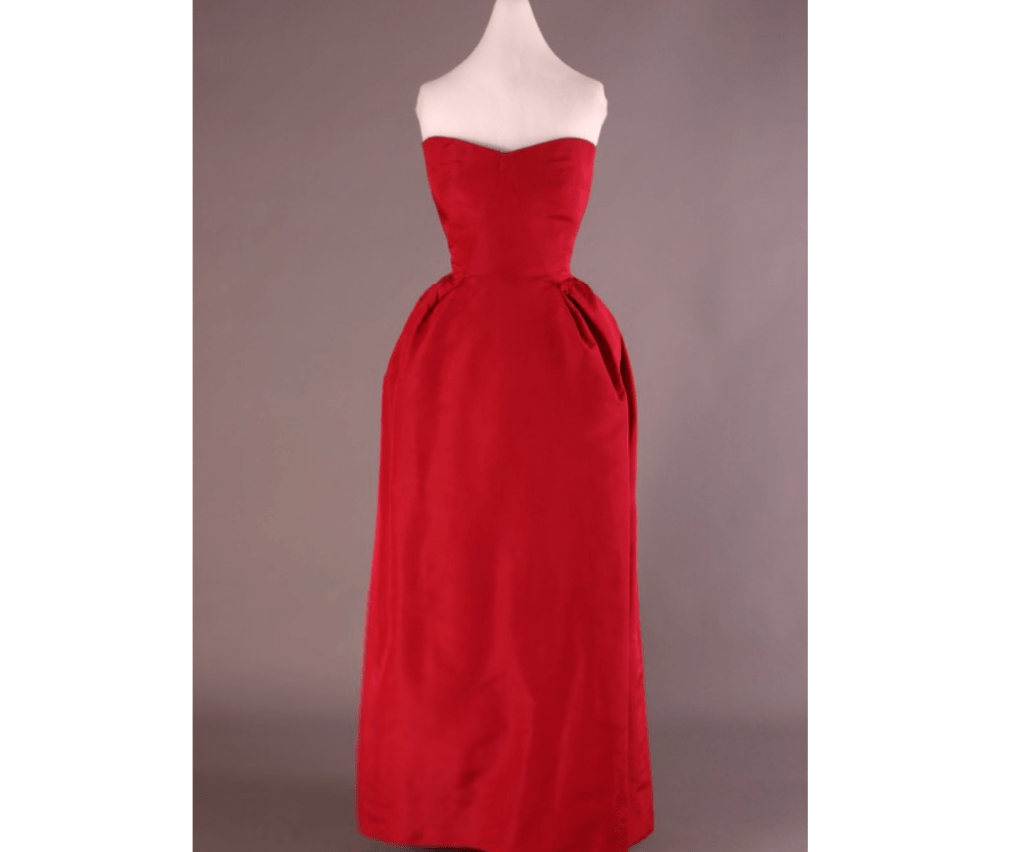
Dior, C. (1952). Red strapless evening gown [Costume]. Wayne State University Libraries, Detroit, MI, United States. https://digital.library.wayne.edu/item/wayne:EM02_89_492_319

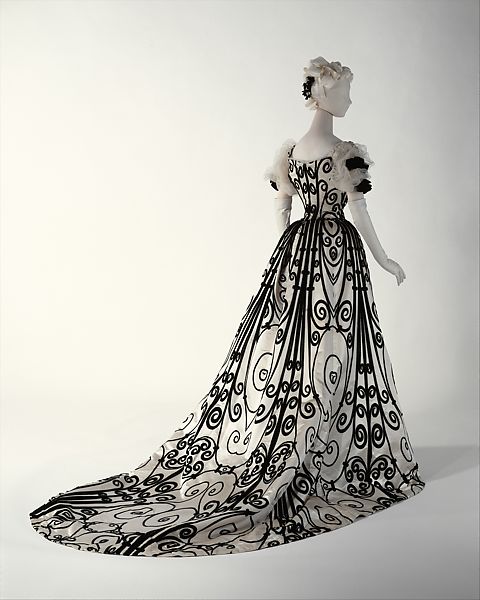
House of Worth. (1898). Black and white evening dress [Costume]. The Metropolitan Museum of Art, New York, NY, United States. https://www.metmuseum.org/art/collection/search/84652?searchField=All&sortBy=Relevance&what=Dresses&ft=House+of+Worth&offset=0&rpp=80&pos=46

James, C. (1951). Pink woman’s evening gown [Costume]. Los Angeles County Museum of Art, Los Angeles, CA, United States. https://collections.lacma.org/node/231800?parent=589000

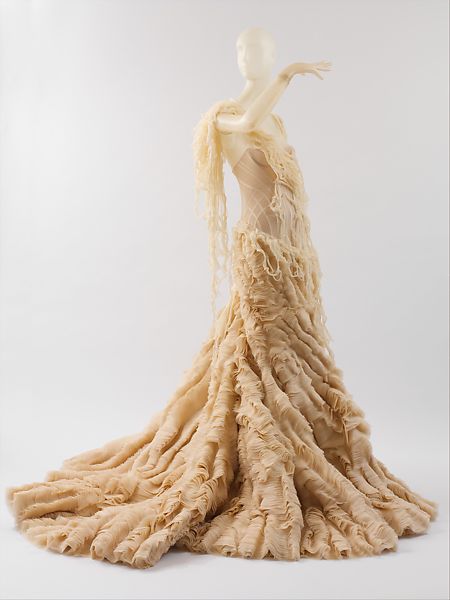
McQueen, A. (2003). Oyster dress [Costume]. The Metropolitan Museum of Art, New York, NY, United States. https://www.metmuseum.org/art/collection/search/88645?searchField=All&sortBy=Relevance&ft=alexander+mcqueen&offset=0&rpp=80&pos=1

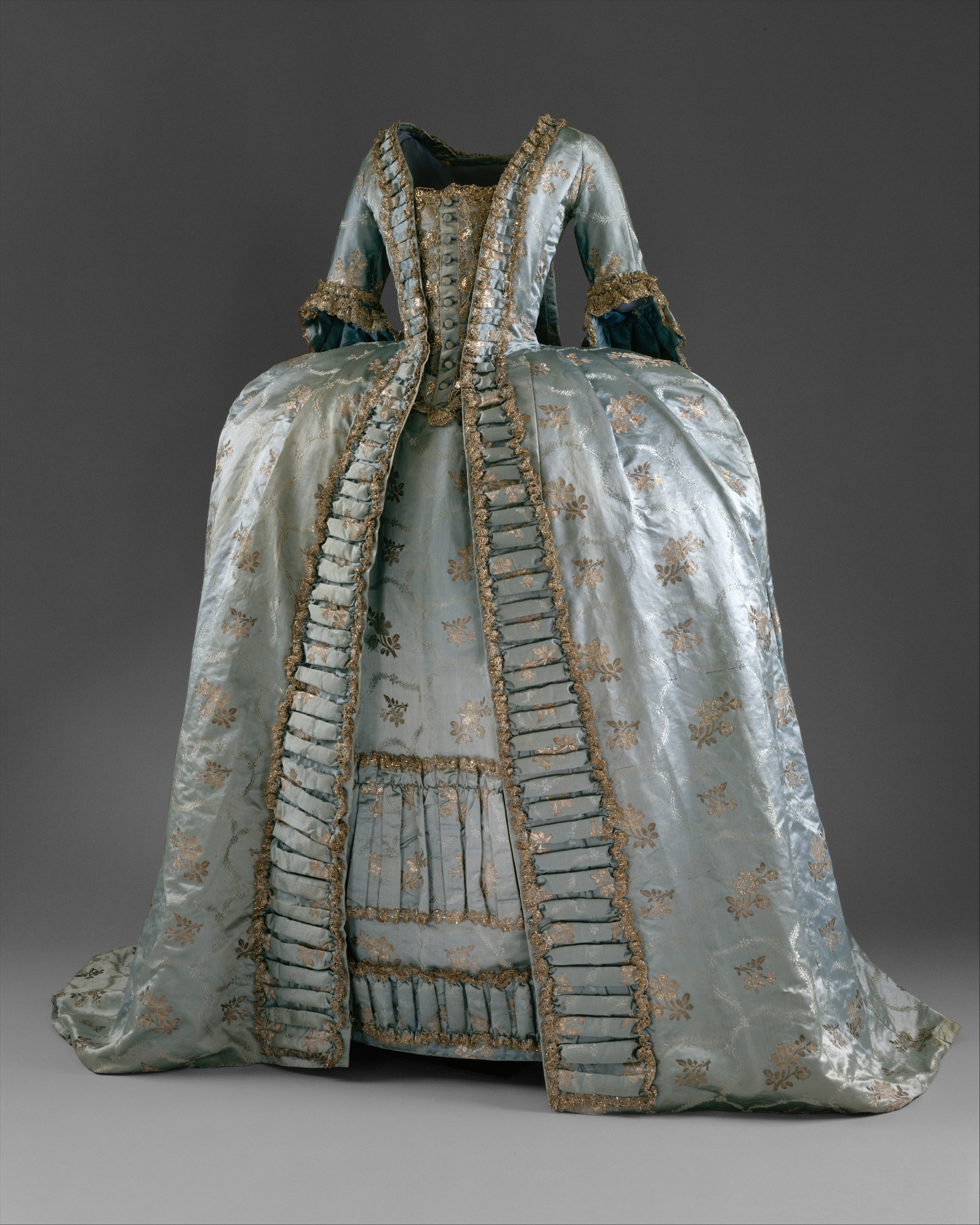
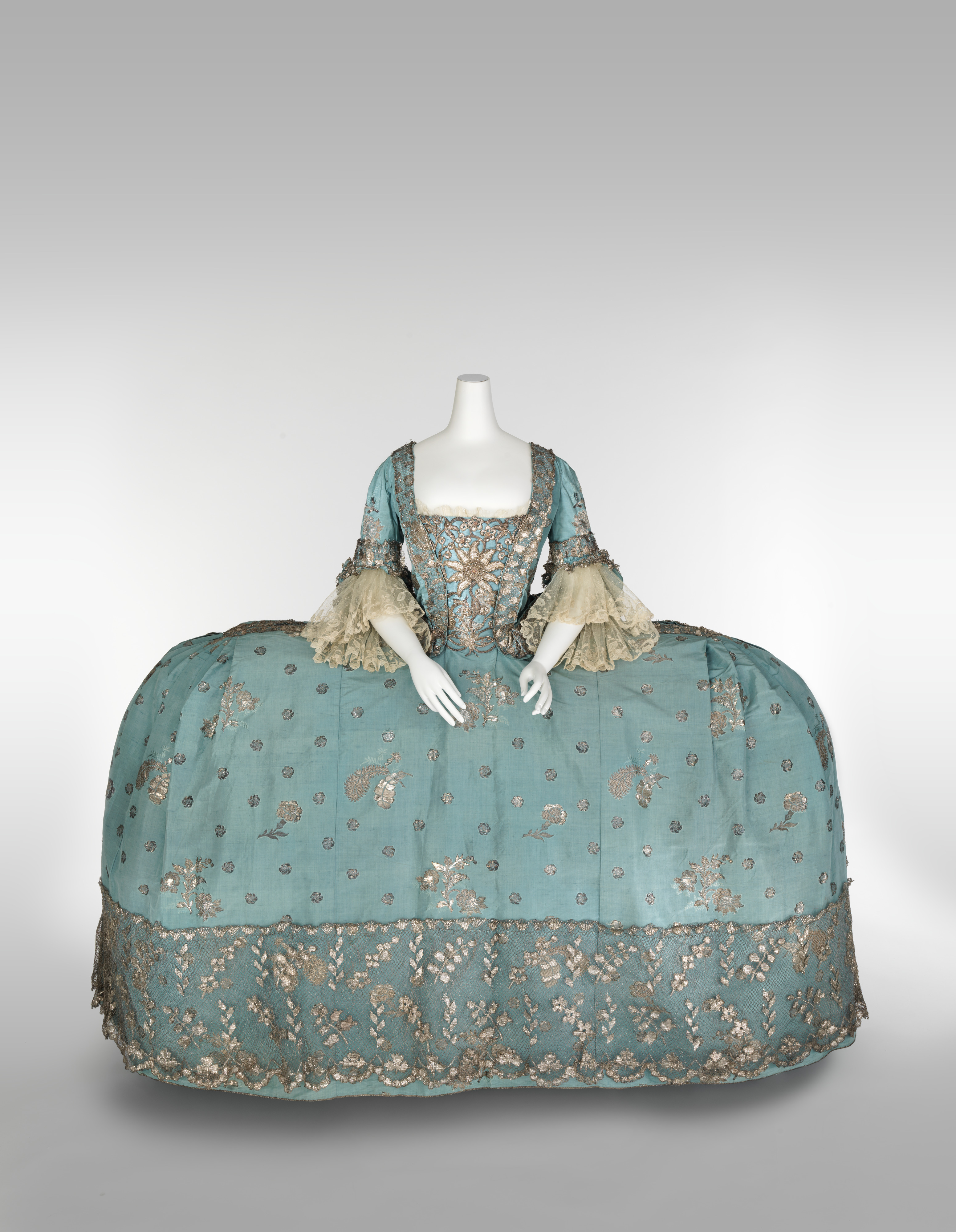
Unknown. (ca. 1750). Blue court dress, British [Costume]. The Metropolitan Museum of Art, New York, NY, United States. https://www.metmuseum.org/art/collection/search/82426

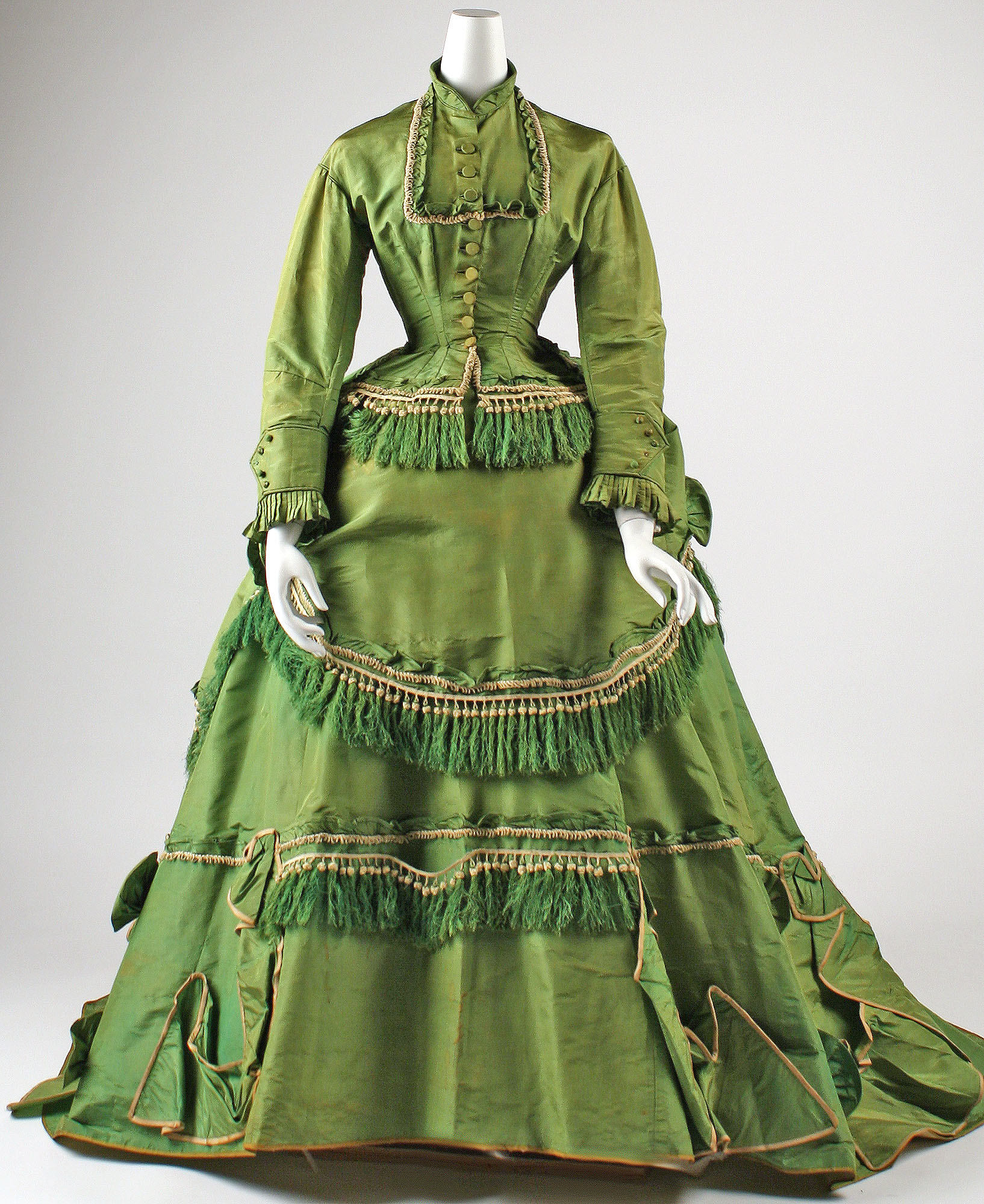
Unknown. (1868). Green dress, American [Costume]. The Metropolitan Museum of Art, New York, NY, United States. https://www.metmuseum.org/art/collection/search/107839?searchField=All&sortBy=Relevance&when=A.D.+1800-1900&what=Dresses&ft=*&offset=0&rpp=20&pos=11
Warp, Weft, and the Worldwide Web: The Costs and Benefits of Broadening Access to Textile/Clothing Collections through Digital Distribution

Researching fashion is a bit of a gamble if you’re using Google; access to accurate references is crucial for good research.  But accessing “the real deal” has often meant physically visiting a specialized institution, as fashion is often what is called a “neglected material”. But what if you don’t have money for a plane ticket to visit the Kyoto Costume Institute or the Met? This is where the power of a digitized special collection shines.

Special collections are by definition, a unique and rare group of culturally valuable items. As such, they stand to benefit the most from digitization; these artifacts, otherwise only accessible to few, can become available to the many. The ability to share these artifacts is a gift – and a challenge.

Both of these dresses are from Wayne State’s Digital Dress Collection!

Challenges

There are challenges universal to any special collection, textile or not. Collections of any kind require:

  1. Specialized knowledge and skills to preserve the collection, and;
  2. Large, secured, temperature- and light-controlled facilities to house it.

Clothing is particularly costly to preserve; some pieces are too old to be hung and must be laid flat in an archival box with as few folds as possible. They cannot be “taken out” like old books can, and are often unwieldy and fragile. Imagine trying to store some of the garments below!

Preservation aside, digitization poses even more challenges:

  1. The skills and knowledge needed to safely mount and photograph clothing;
  2. The infrastructure, technical skill, and subject knowledge needed to create a usable database,
  3. An commitment to navigating changing metadata standards, and;
  4. A clear understanding of who “owns” any digital records.

Because of these challenges, garments are often left out of the digital realm of special collections.

So why do it?

If an institute has already collected and preserved these garments, digitization turns a closed collection into an international resource, no matter how small the collection.

  • Digitization greatly reduces the access barrier, encouraging new scholarship. It also increases their value as resources and the institute’s value as a producer of knowledge.
  • Fashion is often of popular interest; a good collection of garments can bring positive attention to a library from casual browsers.
  • Each time someone moves a garment, it is at risk of damage. Digitizing them ensures they are seen and used to their full extent without handling.
  • By treating a special collection like any other electronic resource, librarians can make these artifacts even more useful; for instance, the ability to sort by designer and era! Some, like the Smithsonian, have even turned some objects 3-D!
  • Most of the garments currently preserved are European/American; culturally appropriate collection, preservation, and digitization of non-eurocentric textiles would open them to a larger audience.

A digitized and searchable special collection is one that meets its users where they are, and brings niche collections to a wider audience. In the world of fashion research, this means that expertly-preserved textiles are just a click away – no trip to the Met required!

Introduce Yourself (Example Post)

This is an example post, originally published as part of Blogging University. Enroll in one of our ten programs, and start your blog right.

You’re going to publish a post today. Don’t worry about how your blog looks. Don’t worry if you haven’t given it a name yet, or you’re feeling overwhelmed. Just click the “New Post” button, and tell us why you’re here.

Why do this?

  • Because it gives new readers context. What are you about? Why should they read your blog?
  • Because it will help you focus you own ideas about your blog and what you’d like to do with it.

The post can be short or long, a personal intro to your life or a bloggy mission statement, a manifesto for the future or a simple outline of your the types of things you hope to publish.

To help you get started, here are a few questions:

  • Why are you blogging publicly, rather than keeping a personal journal?
  • What topics do you think you’ll write about?
  • Who would you love to connect with via your blog?
  • If you blog successfully throughout the next year, what would you hope to have accomplished?

You’re not locked into any of this; one of the wonderful things about blogs is how they constantly evolve as we learn, grow, and interact with one another — but it’s good to know where and why you started, and articulating your goals may just give you a few other post ideas.

Can’t think how to get started? Just write the first thing that pops into your head. Anne Lamott, author of a book on writing we love, says that you need to give yourself permission to write a “crappy first draft”. Anne makes a great point — just start writing, and worry about editing it later.

When you’re ready to publish, give your post three to five tags that describe your blog’s focus — writing, photography, fiction, parenting, food, cars, movies, sports, whatever. These tags will help others who care about your topics find you in the Reader. Make sure one of the tags is “zerotohero,” so other new bloggers can find you, too.

Design a site like this with WordPress.com
Get started